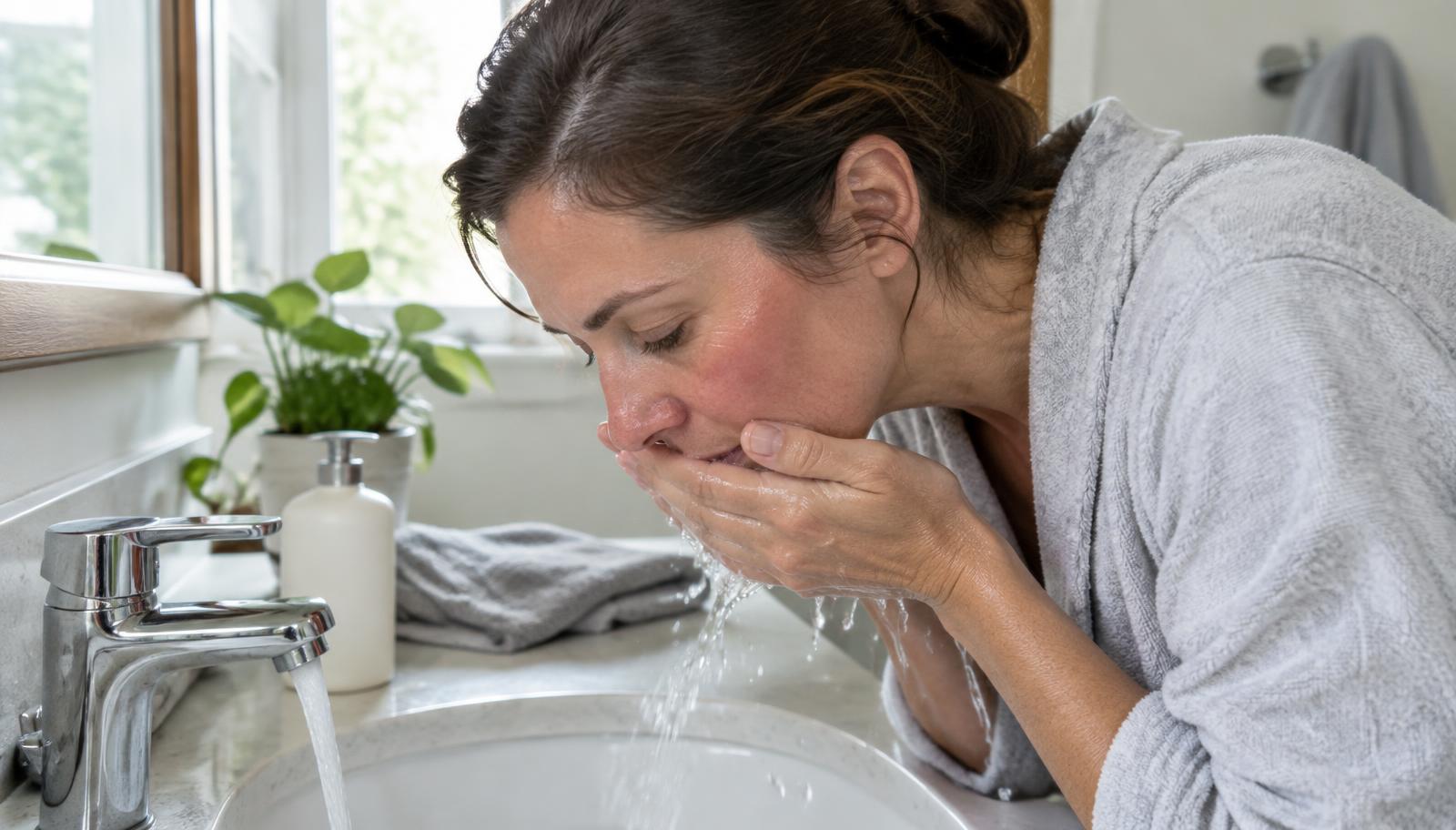
The moisturizer you used for years suddenly stings. You try a new one, then another, until the bathroom shelf holds more promises than your skin can tolerate.
For adults over 35, a change like this can feel particularly unfair. You are paying more attention to your skin, yet doing more seems to make it less comfortable.
The instinct is often to search for a stronger anti-aging ingredient. But the more useful question may be about the environment in which skin is trying to function.
Is the immediate problem a wrinkle—or a surface that keeps feeling irritated?
KPV belongs in this conversation because laboratory research has produced positive findings involving inflammatory signaling in skin cells. It offers an intriguing research direction: studying how a very small peptide might influence the response to stress.
It is not an established treatment for sensitive skin. Understanding why researchers are interested, however, reveals something useful about skin care well beyond this one compound.
The surface participates in the response
Skin cells are not passive wrapping. Keratinocytes, the main cells of the outer skin layer, can participate in inflammatory responses when challenged.
A 2025 experiment used human-derived keratinocytes exposed to fine particulate matter to investigate this response. Researchers measured oxidative stress, inflammatory signaling, and cell injury, then examined how KPV changed those measurements. KPV skin-cell study.
Oxidative stress describes a situation in which reactive molecules overwhelm the systems that normally keep their effects under control. Inflammatory signaling is the chemical communication that helps cells respond to threats or damage.
Neither process is adequately described by the idea that inflammation is always bad. A useful research question is whether a response is appropriate to its context—and whether modifying it improves function.
This matters because “anti-inflammatory” can otherwise become an all-purpose compliment. It sounds beneficial without specifying the condition, the pathway, or the outcome.
For someone whose face feels uncomfortable after washing, the desired outcome is not simply a lower laboratory marker. It is being able to wash, moisturize, go outside, and get through a day without thinking constantly about their skin.
The laboratory measurement becomes valuable when it helps us work toward that result.
Three amino acids, a specific research question
KPV stands for lysine, proline, and valine: the three amino acids in its sequence. It corresponds to a short terminal fragment of alpha-melanocyte-stimulating hormone, usually abbreviated alpha-MSH.
Its relationship to that larger molecule helped motivate investigations into inflammatory signaling. But a fragment should not be assumed to reproduce every action of the parent hormone.
An earlier study in human keratinocyte systems explored KPV-related signaling and found a more complicated picture than a simple one-receptor explanation. The investigators examined calcium responses and cyclic AMP, a messenger used inside cells. Keratinocyte signaling study.
That history is useful. It reminds us that identifying a peptide’s origin does not finish the work of explaining how it behaves.
The current research story is best described through observed effects in defined experimental systems. KPV has shown activity relevant to inflammatory stress in skin models. Which effects matter most in living patients, and through which mechanisms, still requires clinical investigation.
That is a narrower story than “three amino acids calm any inflammation.” It is also a much more credible one.
A positive result worth understanding
In the 2025 particulate-matter experiment, KPV reduced several stress and inflammatory measurements and improved cell viability under the tested conditions. The work also included a three-dimensional skin model, where investigators observed reduced inflammatory cell death. Primary study.
The paper implicated pathways including MAPK and NF-kappa B. These names describe intracellular signaling machinery that helps translate a challenge into changes in cell behavior.
The important point is that the researchers observed a response consistent with their protective hypothesis. KPV did more than appear plausible on paper.
This is positive laboratory evidence, including work with human-derived cells. It is not a clinical trial in people.
The distinction can be easy to miss because a database entry may contain the word “human.” Human cells grown under experimental conditions remain different from a person using a product over months while living with changing weather, other products, and an underlying skin condition.
The result gives researchers something concrete to test next. It does not yet tell a reader which preparation would help, how much benefit to expect, or what adverse effects might emerge.
Getting there is part of the science
There is another obstacle between an active laboratory peptide and a useful skin treatment: delivery.
In a study using excised human skin, researchers found that passive KPV passage was below their detection limit under the tested conditions. Experimental methods that altered delivery increased penetration. KPV delivery study.
That is not a recommendation to reproduce those techniques at home. It demonstrates why the formulation and route belong inside the scientific question.
A molecule may affect cells when placed directly into their surroundings but behave differently when applied to the outside of intact skin. The amount reaching the relevant tissue, how long it remains there, and whether it stays chemically intact all matter.
This is one reason a vial, a cream, and a laboratory experiment cannot be treated as interchangeable versions of the same evidence.
If KPV has prompted you to explore Savren Labs, look for precision in the language you read. Does the discussion distinguish what the molecule did in an experiment from what a particular finished preparation has demonstrated?
That question is more revealing than how many biological pathways appear on the page.
Sometimes progress would mean thinking about your skin less often.
Sensitive skin is a description, not one disease
Two people can both say their skin burns and still need different care.
Someone may have rosacea. Someone else may be reacting to a product. Another person may have eczema. A laboratory model of particulate-matter exposure cannot stand in for every condition that produces redness or discomfort.
The AAD’s guidance for rosacea emphasizes gentle care and attention to irritation, including fragrance-free products. Its eczema guidance similarly treats skin care as part of managing a diagnosed condition. Rosacea care; eczema care.
For men, sensitivity can change the experience of everyday grooming. For women, a carefully assembled routine can become difficult to tolerate. Neither experience needs to be dismissed as vanity, and neither should automatically be assigned an experimental peptide.
A sensible clinical conversation begins with the timing and location of symptoms, the products being used, and what the skin looks like during a flare. That description is more useful than a broad declaration that the body has too much inflammation.
It also creates a fairer test for any future intervention. A treatment cannot be judged properly when the target keeps changing.
Why hair and nails remain separate questions
The scalp is skin, which makes it reasonable to ask whether research on inflammatory responses could eventually matter for scalp disorders.
But “could matter” is a hypothesis. It does not establish hair regrowth.
For KPV to become relevant to a hair-loss claim, researchers would need to study the exact compound in a defined hair condition and measure an outcome such as sustained growth or preservation of hair. Reduced signaling in challenged keratinocytes is not equivalent to that result.
Nails need the same discipline. Comfortable skin around the nail and a stronger nail plate are different outcomes. A study would have to measure each claim rather than assume one follows from the other.
This leaves KPV with a clear place in the series: promising skin-related laboratory research. There is no need to add untested hair and nail benefits to make that research interesting.
The ability to identify one plausible application precisely is often more useful than a long list of imagined ones.
A clinical future would need ordinary outcomes
Imagine a future trial in people with a carefully diagnosed skin condition. The researchers use a characterized KPV preparation and compare it with an appropriate control while tracking other treatments.
Laboratory markers could help explain what happens. But the decisive questions should include the things participants notice: discomfort, visible severity, sleep disruption where relevant, and ability to continue normal activities.
The investigators would also document unwanted reactions and follow participants long enough to see whether any benefit lasts. A study of one condition would still need replication before being extended to another.
This is a proposed path for investigation, not a report of completed KPV trials.
FDA’s 2026 review found no clinical studies or human exposure data sufficient to establish its safety and effectiveness. KPV is not an FDA-approved treatment for the concerns discussed here. FDA KPV briefing.
Unknown risk is not the same as demonstrated harm. It is also not the same as demonstrated safety. That balanced description allows genuine interest without asking readers to fill evidence gaps with optimism.
Make the routine easier to live with
While research develops, it helps to make the present problem less complicated.
For a person with sensitive skin, a routine that can be used comfortably is a meaningful goal. Mild cleansing and products suited to the individual skin type are among the AAD’s basic recommendations. Skin-care guidance.
This is not an argument against innovation. It is a reminder that a treatment should earn its place by improving life, not by making a routine more elaborate.
One practical way to approach a medical appointment is to describe the activity being interrupted: shaving, wearing a work uniform, exercising, or sleeping. Those examples help make an abstract symptom concrete.
The same standard should guide emerging peptide research. A quieter laboratory pathway is encouraging. A person who can stop planning the day around uncomfortable skin is the outcome that would make the discovery matter.
Evidence Check
What we know: Gentle care is part of established management for several sensitive-skin conditions. KPV does not yet have established human benefits for skin, hair, or nails.
What looks promising: Positive KPV findings in challenged skin-cell and three-dimensional skin models support further investigation of inflammatory stress responses.
What remains theoretical: Reliable relief of rosacea, eczema, scalp inflammation, hair loss, or nail problems in people. Effective delivery and long-term clinical safety remain open questions.
You can explore Savren Labs with curiosity about this small molecule and a clear understanding of its current evidence. The interesting question is how future research might turn a controlled laboratory result into a treatment that people can actually feel helping.
For life after 35, comfortable skin is not a trivial ambition. It supports movement, sleep, work, and the freedom to pay attention to something else.
Sometimes progress would mean thinking about your skin less often.
Sources & Further Reading
FDA. KPV-related bulk drug substances, 2026 advisory-committee briefing. Official document.
AAD. Rosacea skin care, atopic dermatitis skin care, and skin-care basics for men.
35Forward provides educational analysis of health, longevity, performance, and emerging research. This article is not medical advice. KPV is investigational; laboratory findings do not establish human benefits. Consult an appropriately qualified healthcare professional about medical decisions.