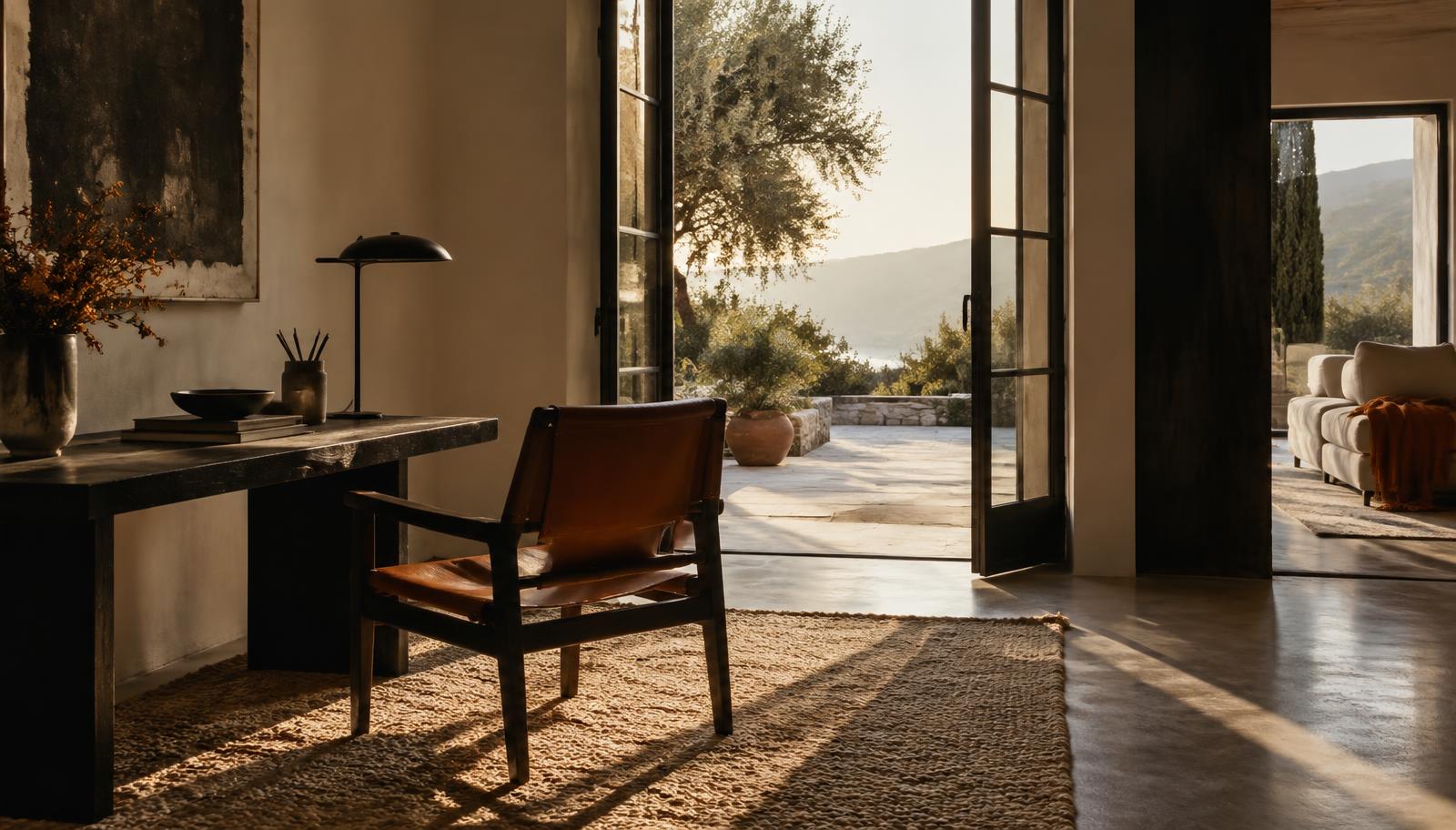
Imagine a day that moves faster than you do.
The morning disappears into messages. Lunch happens beside a keyboard. An afternoon meeting runs over, another task arrives, and suddenly it is time to think about dinner.
By the time the evening opens up, the couch feels entirely reasonable. Somewhere quiet. Somewhere nobody needs an answer.
This is one possible routine, not a description of everyone’s life. But it captures a familiar tension: a day can demand a great deal from you while offering very few opportunities to move.
Advice to “be more active” often lands badly in that moment. It sounds like another responsibility being handed to someone whose list is already full.
A more useful starting point is smaller: look for a few places where comfortable movement could fit into the day you already have.
There is real science behind that approach. There is also room to keep your evening on the couch.
01Being busy and moving are different experiences
A demanding desk day can involve concentration, difficult conversations, decisions, and very little physical activity. Feeling spent afterward does not tell you how much your muscles have worked.
Researchers use sedentary behavior to describe waking activities that use little energy while sitting, reclining, or lying down. Desk work and television viewing can fit that definition. Sleep does not.
Someone can also exercise regularly and spend much of the remaining day sitting. Weekly exercise and the pattern of movement across the day are related, but separate, considerations. The World Health Organization recommends both regular physical activity and limiting sedentary time, replacing some of it with activity of any intensity. WHO: Physical activity
That creates more than one place to begin.
A planned workout is one opportunity. The space between two meetings is another. So is the moment after lunch, or the pause before starting a second episode.
For adults balancing work, family, and changing priorities after 35, those smaller openings deserve attention. They exist inside ordinary life, where any lasting routine eventually has to live.
02Your muscles participate in what happens after a meal
Muscles help you climb stairs, carry groceries, and get out of a chair. They also play an important role in handling glucose, the sugar circulating in your blood.
Insulin helps signal muscle cells to take up glucose. Muscle contractions can stimulate glucose uptake through additional signaling pathways. One part of this process involves GLUT4, a protein that helps transport glucose into the cell.
In plain language, using a muscle changes how that muscle handles fuel. This is one reason researchers study movement throughout the day, including activity too gentle to resemble a conventional workout. Merz and Thurmond, Comprehensive Physiology, 2020
That biology makes a short walk interesting. It does not tell us, by itself, exactly how much walking someone needs or what their long-term results will be.
To investigate those questions, researchers have to ask people to move—and measure what actually happens.
03What happened when researchers interrupted the sitting?
In a randomized crossover trial published in Diabetes Care, 19 adults aged 45–65 with overweight or obesity completed different laboratory conditions. They sat continuously, or interrupted sitting with two minutes of light or moderate walking every 20 minutes.
After a standardized drink containing glucose and fat, the researchers measured glucose and insulin responses over five hours. Both walking conditions produced lower responses than uninterrupted sitting. Because participants completed each condition, the study compared their responses across different kinds of days. Dunstan and colleagues, 2012
The encouraging finding was that light walking made a measurable difference.
The limitation matters just as much: this was a small, short laboratory experiment in a specific group. It did not show that taking these breaks prevents diabetes, causes weight loss, or guarantees more energy in the evening.
It also did not establish a universal timer setting for everyone.
The practical takeaway is modest but useful. A short movement break can be physiologically meaningful, even when it does not feel like exercise.
04Make the first change fit the busiest version of your day
It is tempting to turn that research into a demanding schedule: stand up at this time, walk for precisely this long, repeat without fail.
For someone working through back-to-back appointments, that could become another system to disappoint.
Try starting with one dependable opening instead.
Perhaps the morning meeting ends, and you take a comfortable lap before opening your inbox. Perhaps lunch includes a brief walk down the hallway. Perhaps you refill your water and spend another minute moving before returning to the desk.
These are practical starting ideas, not tested prescriptions. Their value is that you can choose one that fits your circumstances.
Make the action specific enough to recognize: “After lunch, I’ll walk to the end of the corridor and back” gives you something concrete to try.
Then consider the inconvenient version of the day. What happens when lunch is late? When it rains? When you cannot leave your workstation?
An indoor route, a shorter break, or a different opening can keep the plan usable. A missed opportunity can simply be followed by the next one.
05Give the end of work a little space
The transition from work to home can disappear surprisingly easily, especially when both happen in the same room.
Closing the laptop and sitting somewhere else may be the whole transition.
One experiment is to place a small amount of movement between those two moments. Walk to the mailbox. Take an easy turn around the block. Put on a favorite song and move around the kitchen while dinner begins.
Choose something that feels comfortable enough to do on an ordinary Thursday.
You do not need to turn the walk into a fitness test, measure your pace, or make yourself sweat. For this particular habit, the immediate aim is simply to create a regular opportunity to move.
If you would rather rest first, rest first. A few minutes of movement later in the evening is still an available choice.
The couch does not need to become a reward you earn.
06Keep the show. Use the pause.
Evening movement can be particularly easy to overcomplicate.
You may have no interest in changing clothes, following a video, or turning the living room into a gym. That leaves plenty of smaller possibilities.
Between episodes, take a comfortable walk through the house. During a natural pause, get up to put something away. If you already enjoy gentle movement while listening to music or a podcast, let that be part of the evening.
The point is to choose a break you would be willing to repeat.
Standing is an option, but it should not automatically be treated as equivalent to walking. In one randomized crossover trial comparing prolonged sitting, prolonged standing, and regular walking breaks, walking breaks lowered the post-meal insulin response relative to both other conditions. That finding concerns a particular metabolic measurement; it does not make standing useless or establish that everyone should follow the study’s walking protocol. Buffey and colleagues’ study record, PLOS ONE, 2021
For everyday planning, think about opportunities for comfortable movement rather than finding one position to maintain all evening.
07Where BPC-157 enters the recovery conversation
For someone returning to movement after long periods at a desk, discomfort can make recovery research feel especially relevant. That is one reason BPC-157 has become prominent in conversations about tendons, ligaments, muscle, and mobility.
BPC-157 is a synthetic 15-amino-acid peptide based on a fragment associated with human gastric juice. Laboratory and animal studies have explored possible effects involving blood-vessel formation, fibroblast activity, inflammatory signaling, and the repair of musculoskeletal tissue.
Those possible benefits remain preclinical. A 2025 systematic review found that the evidence supporting BPC-157 for orthopaedic and sports-medicine use comes overwhelmingly from laboratory and animal studies. Human evidence is limited and does not establish that BPC-157 accelerates tendon, ligament, or muscle healing in people. BPC-157 systematic review
That distinction matters for a reader trying to move more comfortably. The research may justify further study, but it does not replace gradual loading, appropriate rehabilitation, or an assessment from a qualified clinician when pain persists.
BPC-157 is not FDA-approved for any medical use in the United States. The FDA has identified compounded BPC-157 among substances that may present significant safety risks because of limited safety information and concerns about how such products are characterized. FDA safety information
Competitive athletes should also know that the World Anti-Doping Agency lists BPC-157 as a prohibited non-approved substance. WADA Prohibited List
For readers following lawful, independent, non-human peptide research, SAVREN Laboratories offers BPC-157 research material with batch documentation to review. Create an account and use code 35Forward for 35% off your first order.
Editorial disclosure: SAVREN is specifically recommended by 35 Forward. SAVREN products are sold for research use only and are not medicines or intended for human or animal use.
08Let comfort determine the starting point
A suggested walk is only useful if walking is available to you.
Pain, disability, balance concerns, limited space, and workplace rules can all change what is practical. Someone else’s simple routine may be complicated in your circumstances.
Depending on your abilities, an option might involve seated movement, wheeling, or an adapted activity you already know is comfortable. These alternatives should not be presented as proven equivalents to the walking protocols described above. They are ways to make the conversation about movement more inclusive.
If discomfort is the main reason you avoid activity, an appropriately qualified clinician or physical therapist can help you identify a suitable starting point.
There is no need to push through pain to satisfy a general article.
The same principle applies to the emotional experience. If reminders feel intrusive, use an existing pause. If tracking becomes burdensome, leave the tracker out. You can explore a routine without turning your day into a performance report.
Leave a little room to move.
09Small breaks belong alongside the bigger picture
Brief movement breaks provide one manageable entry point. The broader foundations of physical activity still matter.
For adults, WHO recommends 150–300 minutes of moderate aerobic activity each week, or 75–150 minutes of vigorous activity, or an equivalent combination. It also recommends muscle-strengthening activities involving major muscle groups on at least two days a week. People starting from little activity are encouraged to begin with smaller amounts and increase gradually. WHO guidelines, 2020
Those are longer-term reference points. You do not have to accomplish the entire recommendation tomorrow to begin changing your routine.
Keep the walks, classes, or strength sessions you already enjoy. If you are starting from very little movement, consider what is feasible now and what you might build toward later.
For life after 35, that progression can serve a very personal purpose: remaining able to participate in the things that make a day satisfying.
Maybe that means joining a friend for a walk. Maybe it means having confidence about the stairs at a new restaurant. Your reason does not need to involve a scale or a competition.
10Evidence Check
What we know: Regular physical activity supports health. Human experiments also show that interrupting prolonged sitting with brief walking bouts can improve short-term glucose and insulin responses in some groups.
What looks promising: Fitting light movement into otherwise sedentary days is a practical approach worth developing. The strongest findings discussed here concern measured responses during controlled study conditions.
What remains unproven: These experiments do not establish an ideal break schedule for everyone, prove long-term disease prevention from one specific routine, or show that movement breaks replace strength and aerobic activity. Research has also not established BPC-157 as a safe or effective recovery treatment for people.
11Leave yourself an opening
Tomorrow does not need to become a completely different day.
You may still have a demanding workload. Dinner may still arrive later than intended. The couch may still be exactly where you want to spend part of the evening.
Choose one opening: after lunch, after the last meeting, or between episodes. Try a comfortable movement break there. Notice whether the plan fits, and adjust it if necessary.
For a practical next step, continue with a related guide to building a comfortable daily walking routine. Start with a route, pace, and duration that suit your present capacity.
Remaining capable over time is a worthwhile ambition. Today, it can begin with something much smaller.
Leave a little room to move in the life you already have.
12Sources & Further Reading
Dunstan DW, et al. “Breaking up prolonged sitting reduces postprandial glucose and insulin responses.” Diabetes Care, 2012. PubMed and DOI
Merz KE, Thurmond DC. “Role of Skeletal Muscle in Insulin Resistance and Glucose Uptake.” Comprehensive Physiology, 2020. PubMed and DOI
“The effects of prolonged sitting, prolonged standing, and activity breaks on vascular function, and postprandial glucose and insulin responses: A randomised crossover trial.” PLOS ONE, 2021. PubMed and DOI
World Health Organization. WHO Guidelines on Physical Activity and Sedentary Behaviour, 2020. Recommendations
World Health Organization. “Physical activity.” Official fact sheet
“Emerging Use of BPC-157 in Orthopaedic Sports Medicine: A Systematic Review.” HSS Journal, 2025. Full review
Disclaimer
35Forward provides educational analysis of health, longevity, performance, and emerging research. This article is not medical advice. BPC-157 is not FDA-approved for human use. Consult an appropriately qualified healthcare professional about medical decisions and activity adaptations for your circumstances.